Renting Space You Don't Need: The True Cost of the Post-Move Storage Trap
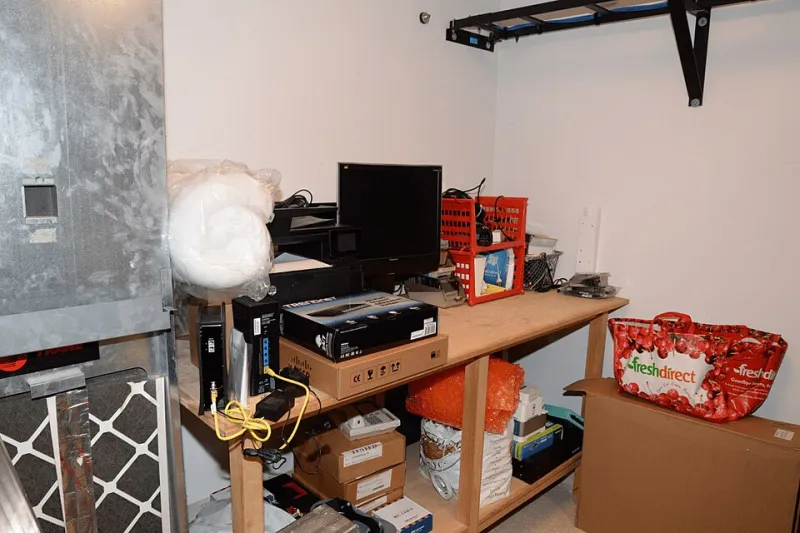
Photo: Federal Bureau of Investigation, Public domain, via Wikimedia Commons
The moving truck pulls away, the boxes are stacked in the new home, and somewhere in the chaos, a familiar realization sets in: there is simply too much stuff. For millions of Americans, the immediate solution is a storage unit — a seemingly harmless monthly expense that promises flexibility and breathing room. What many do not anticipate is how quickly that temporary arrangement becomes a permanent, quietly draining financial commitment.
According to industry estimates, the United States has more self-storage facilities per capita than any other country in the world, with roughly one in eleven households currently renting a unit. A significant portion of those rentals begin immediately following a residential move. Understanding why this pattern is so prevalent — and how to interrupt it before it starts — can save movers hundreds, if not thousands, of dollars over the course of a year.
The Numbers Behind the "Temporary" Storage Decision
The average monthly cost of a standard 10x10 storage unit in the United States ranges from $100 to $200, depending on location, climate control, and facility amenities. In high-cost metropolitan areas such as New York City, San Francisco, or Boston, that figure can climb well above $300 per month. Over the course of a year, a single storage unit represents an expenditure of $1,200 to $3,600 — money that, in most cases, is spent storing items the renter rarely, if ever, accesses.
The deeper financial issue is duration. Research consistently shows that the average storage renter keeps a unit for approximately 14 months, though a meaningful percentage hold onto their units for several years. What begins as a two-month stopgap while settling into a new home frequently extends indefinitely, driven less by genuine need and more by the psychological friction of making decisions about possessions.
Emotional Attachment Versus Practical Necessity
One of the most important distinctions any mover can make before signing a storage lease is the difference between items they need to store and items they are not yet ready to address. These are fundamentally different situations, yet they are frequently treated as the same.
Genuinely necessary storage serves a defined, time-limited purpose. Examples include seasonal equipment that does not fit in a new apartment, furniture awaiting delivery to a family member, or business inventory during a commercial transition. In these cases, the storage arrangement has a clear end date and a specific function.
Emotional storage, by contrast, is driven by the difficulty of letting go. Inherited furniture that does not match the new home, childhood belongings, duplicate appliances, and boxes that have not been opened in years all fall into this category. The storage unit becomes a way of postponing a decision rather than making one — and that postponement has a measurable monthly price tag.
Before committing to a rental, it is worth asking a straightforward set of questions: Have I used this item in the past 12 months? Would I purchase this item again today? Does storing it cost more annually than replacing it would? If the honest answer to each question is no, the case for storage weakens considerably.
Downsizing Before the Move: The Most Effective Strategy
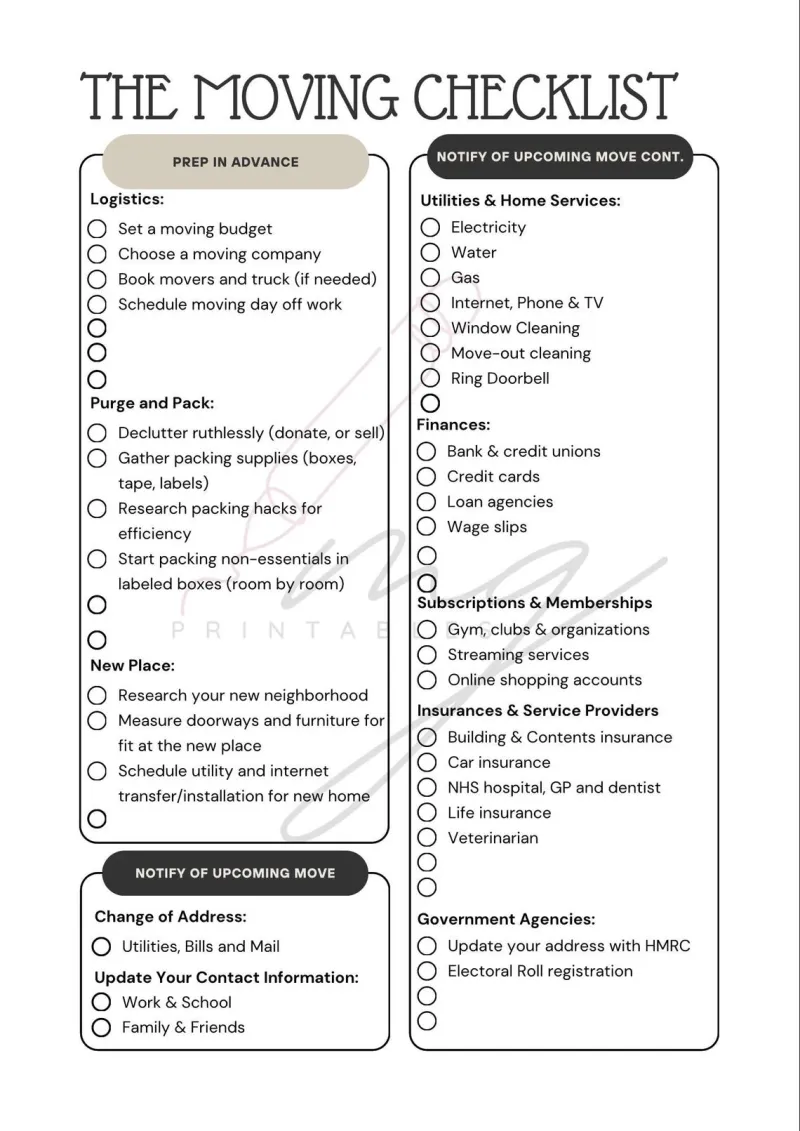
The most financially sound approach to post-move storage costs is to address the inventory problem before the move occurs, not after. A thorough pre-move decluttering — conducted room by room, category by category — accomplishes several things simultaneously. It reduces the volume of items requiring transport, which directly lowers moving costs. It eliminates the pressure that leads to reactive storage decisions. And it forces the kind of deliberate inventory review that most people put off until they are surrounded by boxes.
Effective pre-move downsizing involves more than discarding obvious trash. It requires a systematic evaluation of every category of possession: furniture, clothing, kitchen equipment, tools, documents, and sentimental items. For each category, a practical threshold should be established — how many of this item does the new household genuinely need? — and anything beyond that threshold should be sold, donated, or disposed of prior to moving day.
Estate sale services, online marketplaces such as Facebook Marketplace and OfferUp, and donation organizations like Habitat for Humanity's ReStores are all practical channels for redistributing items efficiently. In many cases, the proceeds from a pre-move sale can meaningfully offset relocation expenses.
Alternatives Worth Considering
For movers who do have a legitimate short-term storage need, it is worth exploring alternatives to the traditional self-storage facility before defaulting to the most familiar option.
Portable storage containers offered through services like PODS or U-Pack allow belongings to be stored on-site or transported to a secure facility, often at competitive rates and with greater scheduling flexibility than conventional units.
Full-service storage, in which a company picks up, catalogs, and stores individual items rather than renting a fixed space, can be more cost-effective for smaller volumes of possessions. Customers pay only for the cubic footage their items actually occupy.
Consignment storage through furniture resellers or antique dealers is another underutilized option, particularly for high-quality pieces that would otherwise sit in a climate-controlled unit accumulating monthly fees. The item is stored at no cost while the seller attempts to find a buyer, and the mover receives a portion of the sale price.
Building a Smarter Pre-Move Framework
The most effective way to avoid unnecessary storage costs is to treat the storage decision as part of the broader moving plan, not as an afterthought. At JT Packers & Movers, we consistently advise clients to inventory their possessions at least four to six weeks before their scheduled move date. This window provides enough time to make thoughtful decisions, arrange sales or donations, and arrive at an accurate picture of what genuinely needs to be transported.
A written inventory — even a simple spreadsheet — helps movers visualize the relationship between possession volume and available space in the new home. When that relationship is made explicit, the temptation to defer decisions into a storage unit becomes easier to resist.
The storage unit shuffle is a pattern that costs American movers billions of dollars annually. With deliberate preparation and an honest assessment of what truly deserves a place in the new chapter, most of that expense is entirely avoidable.