From Chaos to Clarity: Your 30-Day Moving Preparation Blueprint
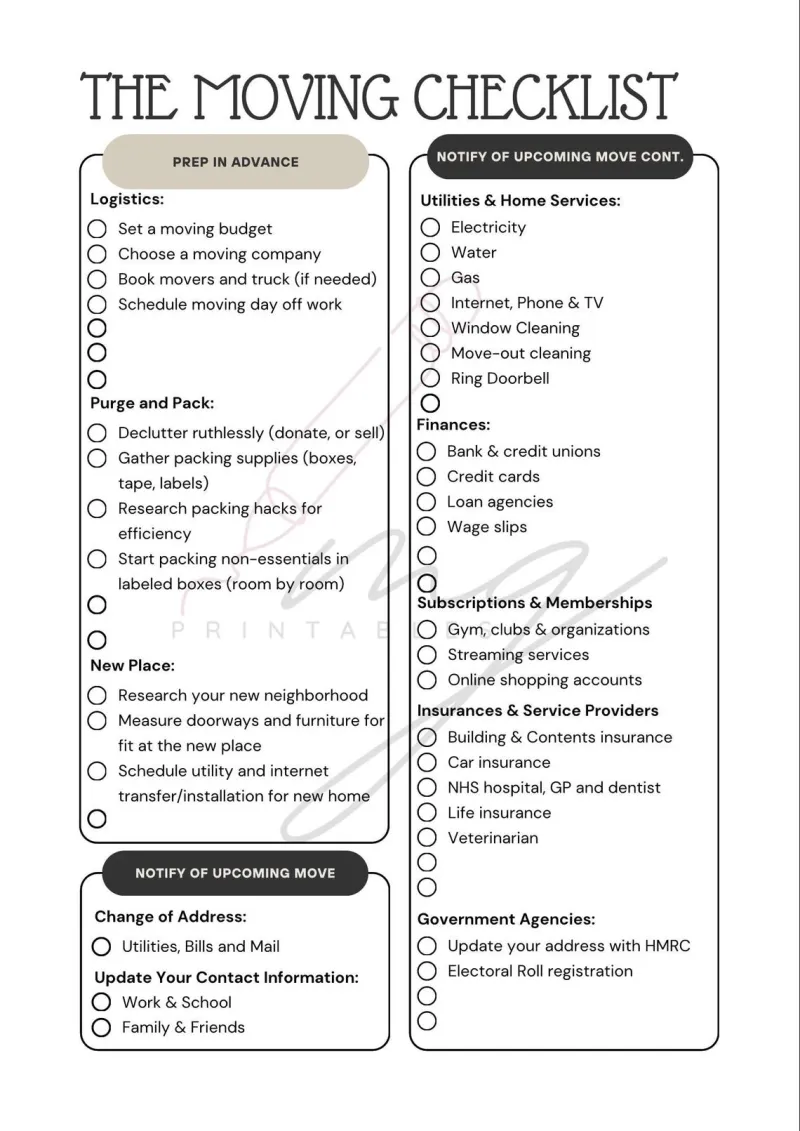
Photo: organized moving checklist clipboard boxes home preparation, via i.etsystatic.com
Why the 30-Day Window Is the Most Critical Period of Any Move
Most people underestimate how much coordination a residential move actually demands. The final month before moving day is not simply a time for packing boxes — it is the period during which dozens of logistical threads must be tied together simultaneously. Miss one, and you may find yourself paying reconnection fees, scrambling for last-minute storage, or discovering that your movers cannot access the property as planned.
At JT Packers & Movers, we have guided thousands of families through residential relocations across the country. The single most consistent predictor of a smooth move is not the size of the home or the distance of the journey — it is whether the homeowner began organizing 30 days in advance. What follows is the same week-by-week framework our team recommends to every client who asks, "Where do I even start?"
Week One (Days 30–22): Lay the Administrative Foundation
The first week should be devoted almost entirely to paperwork, notifications, and decisions — not packing. Physical preparation comes later. Right now, the priority is establishing the administrative backbone of your move.
Confirm your moving date and lock in your mover. If you have not yet scheduled professional moving services, do so immediately. Peak moving season — typically May through September — fills calendars quickly, and waiting even a few days can limit your options or increase your costs. Request written confirmation of your booking date, estimated arrival window, and pricing structure.
Begin your home inventory. Walk through every room and document what you own. A detailed inventory serves multiple purposes: it helps you identify items you no longer need, provides a reference point for insurance purposes, and allows your moving company to give you a more accurate quote. Photographs are strongly recommended for high-value items.
Notify key institutions of your upcoming address change. This list is longer than most people anticipate. Start with your employer's HR department, your bank and credit card providers, your insurance carriers (health, auto, and homeowner's or renter's), the Social Security Administration if applicable, and the IRS. The U.S. Postal Service offers a mail forwarding service that can catch correspondence you may have overlooked — activate it now rather than later.
Research your new neighborhood's utility providers. Identify who supplies electricity, gas, water, internet, and trash collection at your destination. Many providers require several weeks' notice to schedule new service activations, and some require in-person appointments. Beginning this research in week one gives you the scheduling flexibility you will need.
Week Two (Days 21–15): Downsize Deliberately and Gather Supplies
Week two is when the physical work begins — but with intention. Rather than simply pulling items off shelves and placing them into boxes, treat this week as an opportunity to audit your belongings.
Adopt a room-by-room decluttering strategy. Go through each space and sort items into four categories: keep, donate, sell, and discard. Be honest with yourself. Moving possessions you no longer use or need adds unnecessary cost to your relocation, since most professional movers price by weight or volume. Items in good condition can be donated to local charities such as Goodwill or Habitat for Humanity ReStores, or sold through platforms like Facebook Marketplace or Craigslist.
Schedule a bulk item removal if necessary. Large furniture pieces, old appliances, and accumulated junk often require dedicated removal services. Coordinate this pickup early so that these items are gone before your movers arrive, freeing up space and reducing confusion on moving day.
Gather packing materials. Collect sturdy moving boxes in a variety of sizes, packing tape, bubble wrap, packing paper, and permanent markers for labeling. While it may be tempting to repurpose grocery store boxes, their structural integrity is often compromised. Investing in quality materials now protects your belongings throughout the move.
Begin packing non-essential rooms. Guest rooms, storage areas, and seasonal closets can be packed well ahead of moving day. Labeling each box with both its contents and its destination room in your new home will save significant time during the unloading process.
Week Three (Days 14–8): Handle the Details That Are Easy to Forget
By the third week, your home should feel noticeably lighter, and your administrative notifications should be largely complete. This week is reserved for the tasks that fall through the cracks for even the most organized movers.
Schedule utility disconnections at your current address. Contact your electricity, gas, water, and internet providers to arrange service termination. Schedule disconnection for the day after your move — not the day of — to ensure you have power and connectivity throughout moving day itself.
Confirm your new home's move-in readiness. If you are purchasing a home, verify that your closing date remains on track and that the property will be vacant and accessible on moving day. If you are renting, confirm with your landlord that keys will be available and that the unit has been professionally cleaned. This is also the appropriate time to schedule a final walkthrough of your new property if one has not already occurred.
Arrange childcare and pet care for moving day. Moving day environments are busy, loud, and potentially hazardous for young children and animals. Arranging for them to spend the day with a trusted friend, family member, or professional sitter reduces stress for everyone involved and allows the moving crew to work efficiently.
Notify your healthcare providers. Transfer medical, dental, and veterinary records to providers in your new area. Request prescription transfers from your pharmacy, and ensure you have an adequate supply of any medications to cover the transition period.
Week Four (Days 7–1): Prepare for the Final Push
The final week demands focus and organization. The bulk of the work should already be done; this week is about precision and readiness.
Pack your essentials bag. Set aside a dedicated bag or box containing everything you will need during the first 48 hours in your new home: toiletries, a change of clothes for each family member, phone chargers, important documents (passports, insurance cards, lease or closing paperwork), snacks, and any medications. This bag travels with you — not on the moving truck.
Defrost and clean your refrigerator. At least 24 hours before your move, unplug your refrigerator and allow it to defrost completely. Clean the interior and allow it to dry thoroughly before it is transported.
Confirm all logistics with JT Packers & Movers. Contact your moving coordinator to reconfirm the moving date, start time, addresses, and any special handling instructions for fragile or high-value items. Verify parking arrangements at both your current and new locations to ensure the moving truck has unobstructed access.
Do a final walkthrough of your current home. Check inside every closet, cabinet, and drawer. Look in the attic, basement, and garage. Retrieve items from high shelves and check behind appliances. It is far easier to catch overlooked belongings before the truck departs than to arrange a return trip afterward.
The JT Packers Difference: Planning Is a Service, Not an Afterthought
At JT Packers & Movers, we believe that a successful relocation begins long before our crew arrives at your door. The 30-day framework outlined above reflects the same guidance we provide to clients during our pre-move consultations — because an informed customer is a prepared customer, and a prepared customer experiences a smoother move.
Whether you are relocating across town or across the country, our team is available to help you build a customized moving plan tailored to your timeline, budget, and specific circumstances. Reach out to JT Packers & Movers today to request a free quote and speak with a relocation specialist who can walk you through every step of the process.