Rediscovered and Reconsidered: How to Unearth Forgotten Belongings Before Your Move

There is a particular kind of surprise that comes only during a move — the moment you open a box that hasn't been touched in years and find something you had completely forgotten you owned. A wedding gift still in its original packaging. A camera purchased with good intentions. A collection of books you were certain you had donated. For most Americans preparing to relocate, this experience is not the exception. It is the rule.
What you discover in those forgotten corners of your home is more than just clutter. It is financial weight, logistical complexity, and — if handled thoughtfully — an opportunity to move smarter and spend less.
Why We Forget What We Own
The psychology behind forgotten possessions is well-documented. When an item is placed out of sight — in an attic, a garage shelf, or the back of a closet — it gradually fades from what researchers call our "active inventory." We stop seeing it, and so we stop accounting for it. Over time, it simply ceases to exist in our mental map of the home.
This effect is compounded by the pace of modern life. Purchases are made quickly, gifts arrive frequently, and storage solutions have become sophisticated enough to absorb almost anything without visible consequence. The result is a household that looks manageable on the surface while harboring a significant secondary layer of belongings beneath.
For anyone preparing to move, that secondary layer carries a direct cost. Moving companies — including JT Packers & Movers — calculate quotes based on volume and weight. Every item that travels in the truck affects the final figure. Items you did not know you owned are, in a very real sense, items you are paying to move without having made a deliberate choice to do so.
The Memory Audit: A Room-by-Room Framework
The most effective way to surface forgotten belongings is through what might be called a memory audit — a methodical, physical review of every storage space in the home, conducted with the specific intention of uncovering items that have dropped out of regular awareness.
This process is distinct from ordinary tidying. It requires opening every drawer, every box, every bin, and every cabinet — not to organize, but simply to see. The goal in the first pass is inventory, not decision-making. Resist the urge to sort or discard prematurely. The act of seeing what you have must come before any evaluation of what to do with it.
Begin with secondary storage zones. These are the spaces that exist specifically to hold things that don't have a place elsewhere: attics, basements, garages, storage closets, and the upper shelves of bedroom closets. These areas tend to accumulate the highest concentration of forgotten items and deserve the most careful attention.
Move into primary living spaces with fresh eyes. Kitchen cabinets often hold appliances purchased for a single occasion and never used again. Bathroom cabinets contain products that were replaced long ago but never discarded. Bedroom dressers hold clothing that hasn't been worn in years. Approach each of these spaces as though you were cataloging someone else's home — with curiosity rather than assumption.
Don't overlook transitional spaces. Entryway closets, laundry rooms, and under-stair storage areas are frequently the most disorganized spaces in a home precisely because they serve no singular purpose. They collect everything that doesn't belong somewhere else, which makes them fertile ground for forgotten belongings.
Assigning Value to What You Find
Once you have completed an initial inventory, the next step is evaluation. Not every rediscovered item warrants the same consideration, and the criteria you apply should reflect the real costs of relocation.
Ask three questions about each item:
Would I purchase this again today? This is the most direct test of whether something belongs in your new home. If the honest answer is no — whether because your needs have changed, your taste has evolved, or the item was never truly useful — that is meaningful information.
What would it cost to replace this if I needed it? Some forgotten items turn out to be genuinely valuable: tools, specialty kitchen equipment, electronics, or items with sentimental significance that carry real monetary worth. For these, the calculation shifts. Transporting something that would cost several hundred dollars to replace is often justified even if it adds modestly to your moving bill.
What is the cost of moving it versus replacing it? Moving companies typically charge by weight and volume. A large, infrequently used item that could be repurchased for less than the incremental cost of transporting it may be better donated or sold before the move. This calculus varies by distance — a local move involves different economics than a cross-country relocation — but the principle applies broadly.
Turning Forgotten Items Into Moving Capital
One of the more practical outcomes of a thorough pre-move inventory is the discovery of items with resale value. Estate jewelry, vintage electronics, collectibles, and quality furniture that no longer fits your plans can often be sold through online platforms, consignment shops, or local marketplaces. The proceeds can offset a meaningful portion of your moving costs.
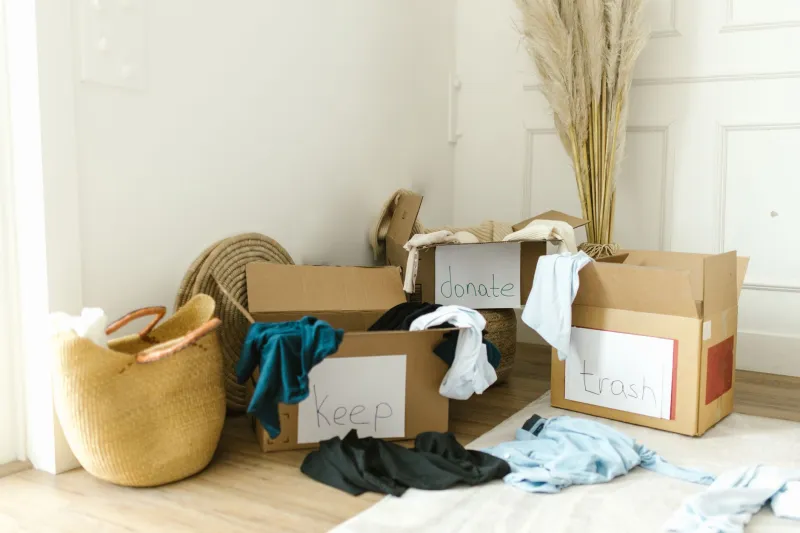
Items without resale value but in good condition are strong candidates for donation. Many national organizations — including Habitat for Humanity's ReStores, Goodwill, and local shelters — accept furniture, household goods, clothing, and appliances. Donating before your move reduces volume, simplifies the packing process, and may provide a tax deduction, depending on your situation.
For items that are neither sellable nor donatable, prompt disposal is preferable to transport. Hauling broken, outdated, or genuinely unusable items to a new address simply relocates the problem rather than solving it.
The Mental Clarity Dividend
Beyond the financial benefits, there is a less tangible but equally real reward to completing a thorough pre-move inventory: clarity. Moving into a new home with only the items you have consciously chosen to keep creates a fundamentally different experience than arriving with the accumulated weight of years of unconsidered accumulation.
New spaces invite new habits. The decisions made during a memory audit — about what deserves space in your life and what does not — tend to carry forward. Many people who complete this process report that their new homes feel more intentional and easier to maintain than the ones they left behind.
Start Earlier Than You Think You Need To
The single most common mistake in pre-move inventory work is beginning too late. Storage zones that have accumulated items over years or decades cannot be meaningfully reviewed in a single afternoon. A realistic timeline allocates at least two to three weeks for the inventory and evaluation process, with additional time for selling, donating, or disposing of items before the moving truck arrives.
At JT Packers & Movers, we have seen firsthand how preparation transforms the moving experience — not just logistically, but financially. The households that arrive at moving day with a clear, considered inventory consistently face fewer surprises, lower costs, and a smoother transition. What you find when you look carefully through your own home may be the most valuable preparation you can do.