Inherited by Default: How to Honestly Evaluate Family Hand-Me-Downs Before They Follow You to Your Next Address
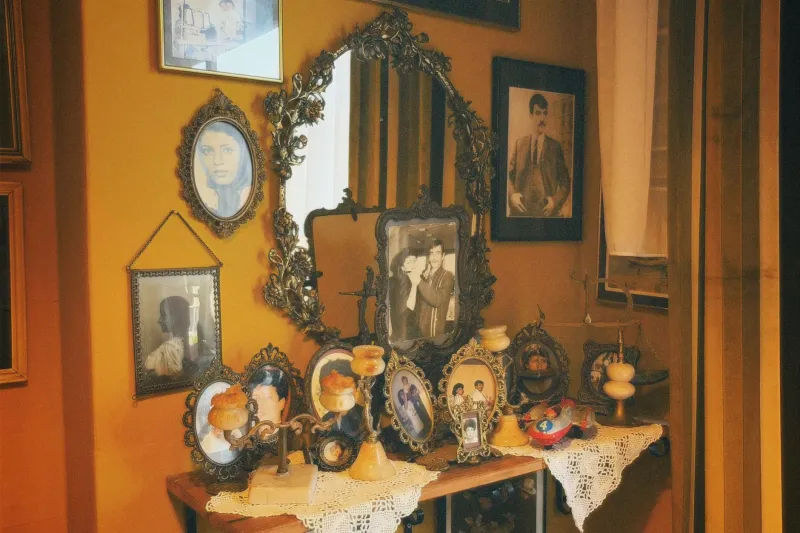
Somewhere in most American homes, there is a corner — a spare bedroom, a garage shelf, a basement alcove — occupied by things that were never truly chosen. A grandmother's china cabinet. An uncle's recliner. A set of encyclopedias from a household that no longer exists. These items arrived through inheritance, obligation, or the simple logistics of a family estate, and they have remained ever since, moved from address to address without deliberate decision.
For many households, inherited belongings represent a quiet but significant portion of the moving inventory. They take up truck space, require packing materials, and demand time — all without offering the daily utility or genuine joy that justifies the cost. Before your next move, this category of possessions deserves a structured, honest evaluation. The goal is not to discard family history carelessly. It is to carry forward only what genuinely belongs in your life.
Why Inherited Items Rarely Get Evaluated
The reluctance to assess family hand-me-downs is understandable. These objects are tied to people, memories, and relationships that carry emotional weight. Questioning whether a piece belongs in your home can feel like questioning the person who gave it. Guilt, family pressure, and a generalized sense of obligation tend to override practical judgment.
There is also the matter of perceived value. Many inherited items are assumed to be worth something — financially, historically, or sentimentally — without that assumption ever being tested. A mid-century dresser might be genuinely valuable, or it might be a common piece that holds meaning only because of its origin. Without investigation, the two are indistinguishable, and both get moved.
The result is an inventory that expands with each generation, accumulating objects that no one deliberately selected and that no one feels authorized to release.
Separating Real Value from Perceived Value
The first practical step in evaluating inherited belongings is distinguishing between items that hold genuine value — financial, functional, or deeply personal — and those that are retained primarily out of obligation.
For pieces you suspect may carry monetary value, a professional appraisal is worthwhile before moving day. Antique dealers, estate sale specialists, and certified appraisers can provide assessments that either confirm your assumptions or correct them. A piece that turns out to be valuable can be insured, stored properly, or sold at a price that reflects its actual worth. A piece that turns out to be ordinary can be released without guilt.
Functional value is easier to measure. Ask directly: Is this item being used in your home? Does it serve a purpose that something you already own does not? If an inherited sofa has sat in storage through two moves, the answer is clear regardless of its condition.
Sentimental value is the most complex category, and it deserves careful thought rather than avoidance. True sentimental value tends to be specific — a particular object connected to a particular memory or person. Generalized sentiment, the feeling that you should keep something because it belonged to someone you loved, is different. One is a reason to keep; the other is a reason to pause and think.
How to Let Go Without Losing the Legacy
Releasing an inherited item does not erase its history or diminish your relationship with the person it came from. What you choose to carry forward is a matter of practicality and honest self-knowledge, not loyalty.
Several approaches allow families to honor the origin of an item while making a responsible decision about its future:
Photograph and document before releasing. A high-quality photograph of a piece, paired with a written note about its origin and significance, preserves the memory without preserving the object. These records can be shared with other family members and stored digitally at no cost.
Offer items to other family members first. Before donating or selling inherited belongings, reach out to siblings, cousins, or other relatives who may have a stronger connection to the piece. What feels obligatory to you may be genuinely meaningful to someone else, and keeping the item within the family satisfies the spirit of inheritance without the logistical burden falling entirely on you.
Donate to institutions with relevant connections. A family item tied to a particular profession, community, or era may be welcomed by a local historical society, library, or museum. This transforms the act of release into one of preservation — the item continues to exist in a context that honors its origin.
Sell with intention. Selling an inherited item is not a betrayal. If a piece has monetary value, selling it and directing the proceeds toward something meaningful — a family trip, a charitable contribution, an investment — is a legitimate way to honor the legacy of the person who left it.
The Moving Cost Equation
From a purely logistical standpoint, the weight and volume of inherited belongings have a direct impact on your moving estimate. Professional movers calculate costs based on the size of the load, the distance of the move, and the complexity of the job. Furniture that is large, fragile, or unusually shaped — categories that frequently apply to older inherited pieces — adds time and cost to every stage of the process.
A single inherited dining set, for example, may require disassembly, custom padding, dedicated truck space, and reassembly at the destination. If that set is not being used and is unlikely to be used, every dollar spent moving it is a dollar that could have been directed elsewhere.
Conducting an honest pre-move audit of inherited items — ideally four to six weeks before your scheduled move date — gives you time to arrange appraisals, coordinate donations, and make decisions without pressure. Items removed from the inventory before the moving estimate is finalized reduce costs directly. Items removed after the estimate is set may still reduce the overall load, but the benefit is greater when the assessment happens early.
Building a Deliberate Inventory
The broader principle at work here applies beyond inherited items. A move is an opportunity to build a deliberate inventory — one in which every object you transport has been consciously chosen rather than passively accumulated. Inherited belongings are simply the category where that deliberateness is most often missing.
As you work through your home before moving day, set aside time specifically for this category. Pull items out of storage. Open boxes that have not been opened since the last move. Look at what you have been carrying and ask, plainly, whether it belongs in your next home.
The answers will not always be easy. But they will be honest, and honesty at this stage translates into a more organized move, a lower moving bill, and a new home that reflects your life as it actually is — rather than as it was inherited.
At JT Packers & Movers, we work with households at every stage of the moving process, from initial planning through final delivery. If you are preparing for a residential move and want guidance on how to structure your inventory for maximum efficiency, our team is available to help you think through every detail before moving day arrives.